

Building Resilience: Practical Steps Toward Self-Sufficiency and Decentralized Systems
Prepared not scared.

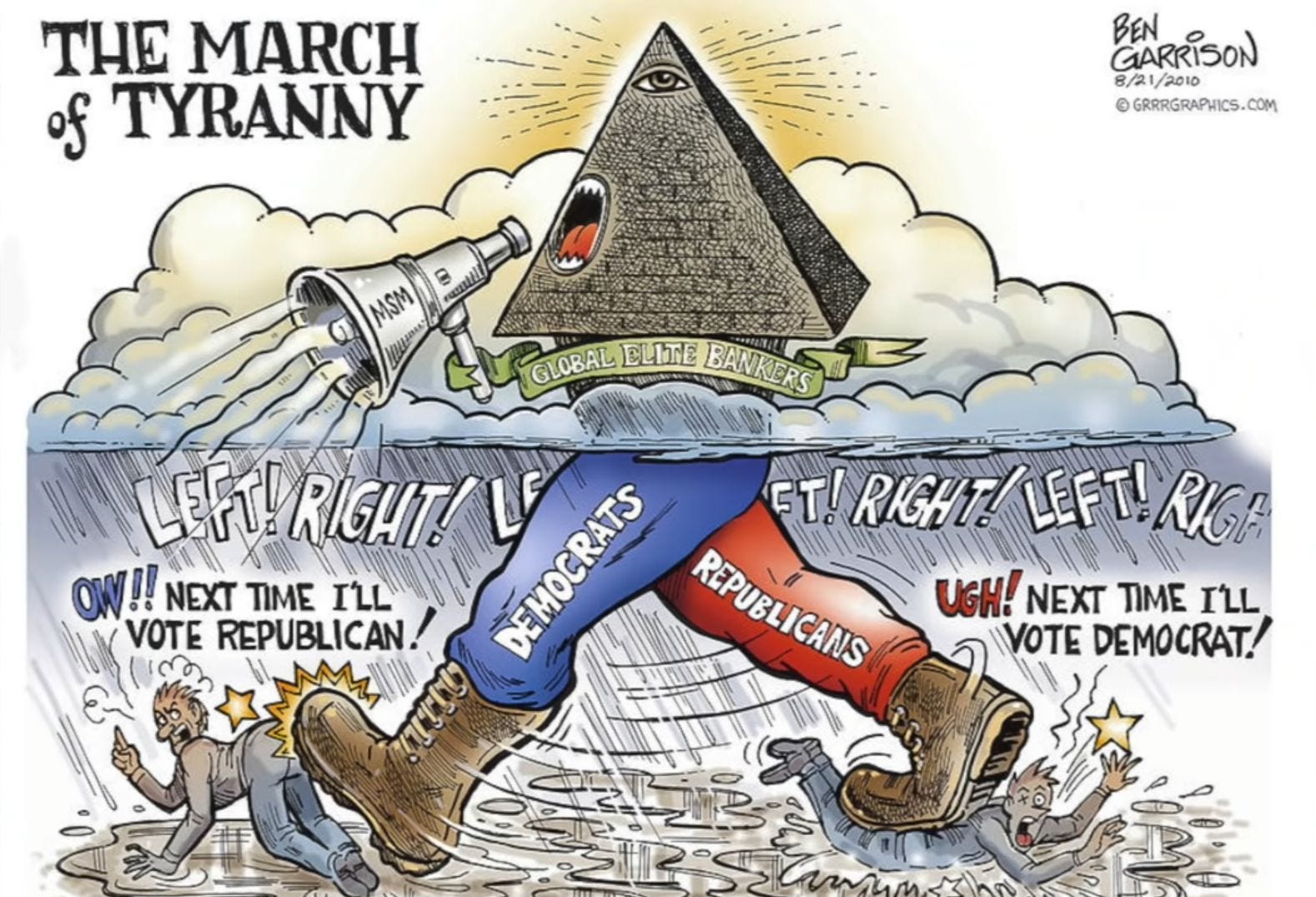
By now, I would hope most of us are keenly aware of the dystopian technocratic slavery agenda that is unfolding. Like many, I have studied and written extensively about what this plan is, who’s working to bring it about, what their ideology or ”religion” is, and what their ultimate (insanely evil) goals are.

There are so many people writing about these topics now and at some point, we must shift our focus more towards solutions. Now that the agenda should be abundantly clear to many of us, the question that remains is, “What the heck can and will I DO about it?” Understanding the agenda is important but in the end, many of the potential solutions will largely remain the same, regardless of the details.
It’s time to get started.
While some will claim that this global control plan will ultimately fail, or that it is Biblical, and we just need to trust in God’s plan—know that I either largely agree, or am simply not here to debate that. This article is more about practical physical preparedness. I think that no matter our beliefs, we must take personal responsibility in the wake of the global agendas that we face. While there are never any guarantees, I find it extremely unwise not to prepare for the many (all-but-certain) predictively-programmed events we are told to expect. Rest assured, they will continue to push the “polycrises” they need, to try and force us into their master plan.
Prepared, not scared!
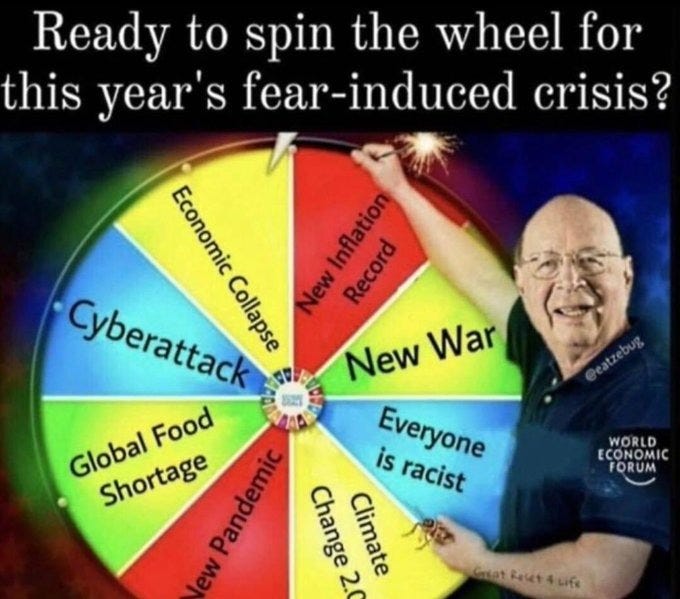
If, in the end, all the preparation is for naught—as in we fail—at least we gave it everything, and we didn’t just lay down and accept our “depopulation” or slavery. If, in the end, all the preparation is for naught—as in, their plan completely fails—we end up in a much better position. That is, we will have returned to a long-overdue place of higher self-sufficiency, tighter community and the ability to better serve our families. There is little downside here, from where I sit. The bottom line is, most Americans have little knowledge or recognition of the self-sufficiency we’ve lost, in just a few short generations. Much of it, seemingly by design.
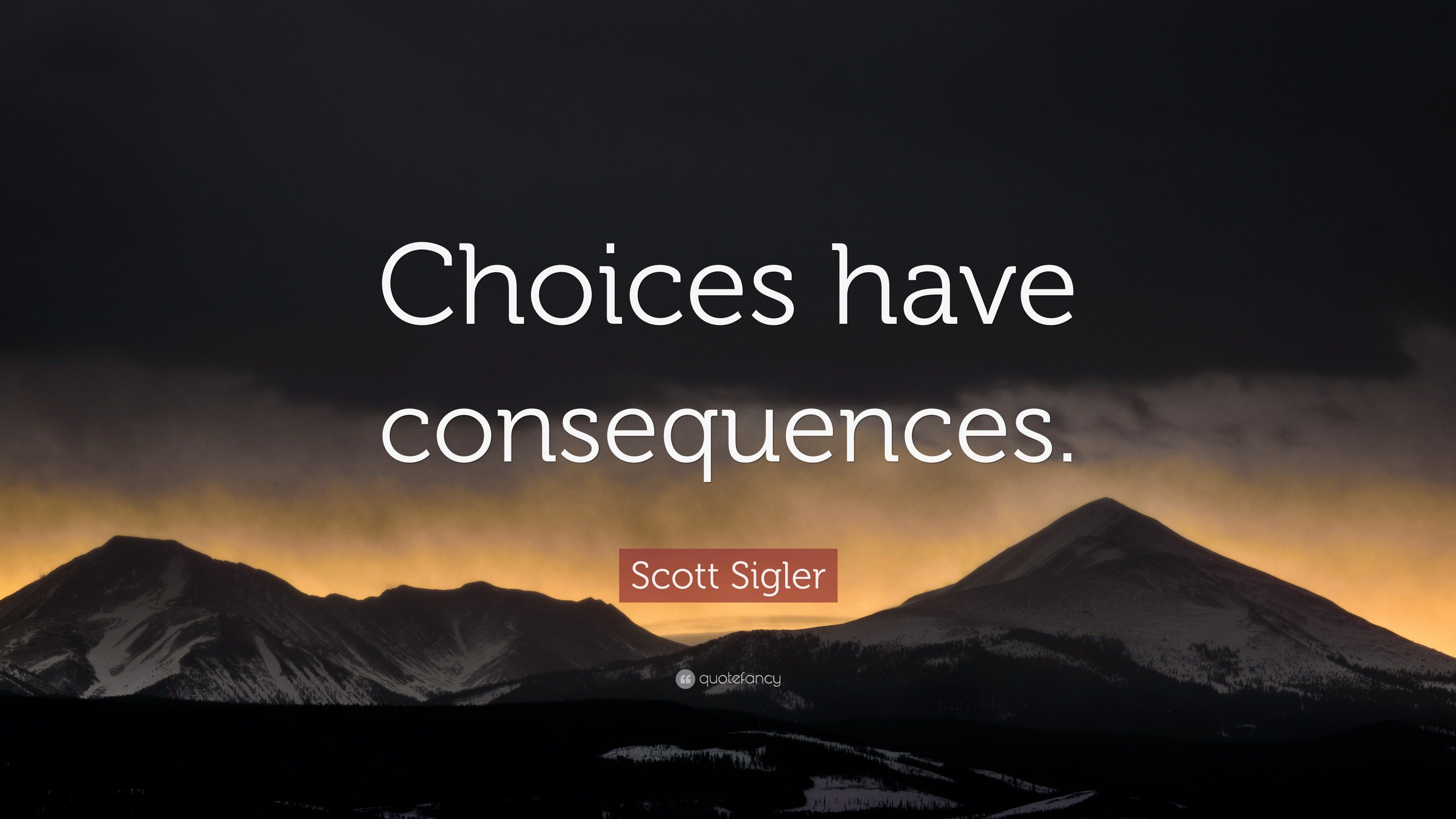
As you read this, the technocratic control agenda marches forward at a hastened pace. Time is not on our side and more “events” are coming. It is time for each of us to make a CHOICE.
But first to set the stage—let’s again detail the agenda at a high level (for those that may have been dragging their feet around waking up). From there, we will detail the choices we have in the face of it all.

The Great Reset: Erasing Ownership for Elite Control
Here’s the bigger picture: the World Economic Forum’s (WEF) “Great Reset” agenda, is a master plan unveiled in June 2020 by former Chair Klaus Schwab, to radically transform global economies into a “stakeholder capitalist” model. The Great Reset is actively pushing for a major overhaul of taxes, regulations, and investments, prioritizing “equity” and “sustainability” (completely inverted BS buzzwords once you truly study it)—at the direct expense of our Constitution, our individual property rights—all of our assets and freedoms!
Are you listening??
I would be remiss if I didn’t point out that what we ultimately face is even more diabolical than that—when you consider that this cabal’s plans are deeply rooted in the “elites” eugenics and “depopulation” movements. Ok, I get it—it is still difficult for most to accept the fact that a group of unelected bureaucrats, technocrats, NWO secret society scumbags and parasitic satanic “elite” bloodlines want most of us dead. Until then, let’s just continue on with the more-easily digestible obvious.
Klaus Schwab boldly proclaimed they were using the PLANDEMIC as a catalyst to “build back a greener and fairer world,” with governments working together to implement wealth taxes, eliminate fossil fuels, and leverage cutting-edge technologies like AI and surveillance for what he calls the “public good.”

Meanwhile, Klaus Schwab’s daughter, Nicole Schwab, has been actively promoting the WEF’s ‘Great Reset’ plan, which is deliberately designed to exploit crises to gain control. Nicole Schwab explicitly revealed their strategy: use crises as a smokescreen to dismantle the existing economy and replace it with a so-called “sustainable” system, which would be firmly controlled by the elite. Smoke and mirrors 101—and the masses largely continue to fall for it.
Here’s the lowdown at the higher level: the clique of powerful, unelected elites gathering at Davos has been not-so-secretly orchestrating a massive power play, backed by over 1,000 gigantic corporations like Google, Apple, and BlackRock. Under the guise of combating inequality and climate change (virtual eye-roll)—they’re actually working to centralize control of EVERYTHING and to reshape the global economy in their favor.

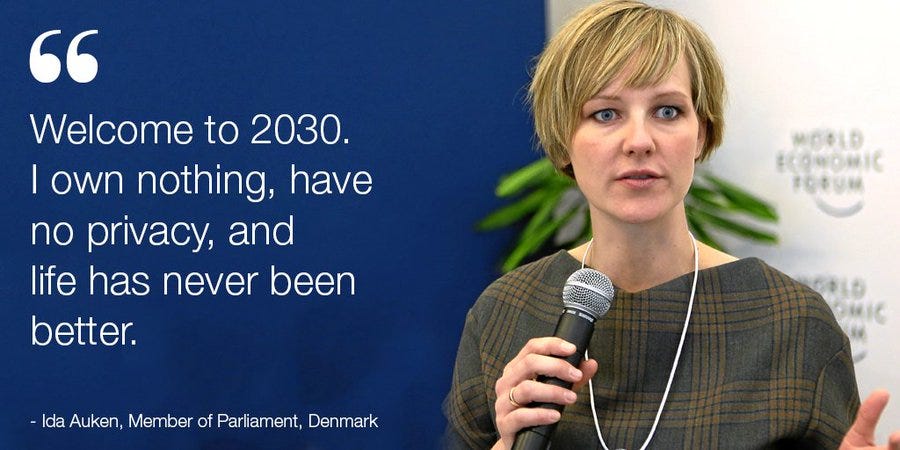
The World Economic Forum’s infamous slogan, “You’ll own nothing and be happy,” is the smoking gun that exposes some of their true intentions. This mantra originated from a 2016 essay by Danish politician Ida Auken, published on the WEF’s website, which envisioned a world by 2030 where people would rent everything—from homes and cars to appliances and clothes—through shared services and drones. Auken painted a picture of a city where “I don’t own anything…everything you considered a product has now become a service.” The WEF amplified this idea in a video summarizing their predictions for 2030, sparking a global debate and backlash.
Although Auken later backtracked, claiming it was just a thought-provoking scenario to discuss the pros and cons of technology—the damage was already done. Whether or not you want to believe in this (true) “conspiracy theory”, the fact remains that this concept perfectly encapsulates the Great Reset’s push for a subscription-based economy, where corporations own all the assets and individuals are forced to lease them, lining the pockets of Big Tech and financial giants while stripping away the security and freedom that comes with ownership.
The Great Reset ties directly to housing: Schwab’s plan emphasizes “green urban infrastructure” and ESG (environmental, social, governance) metrics to force denser living and reduce private land use, aligning with UN Sustainable Development Goals for 2030. In Australia, for example, this manifests as the bedroom tax, which would coerce downsizing into high-rise rentals—echoing the UK’s failed 2013 “bedroom tax” that harmed vulnerable tenants without boosting supply. Pauline Hanson of One Nation has called Labor’s housing tweaks a “first step” toward this Reset, where government stakes in homes (up to 40%) morph into outright control.
Globally, it’s the same script: Tax private property to fund “equitable” redistribution, while the self-proclaimed “elites” amass billions of our assets during crises. This isn’t about fairness—it’s about dependency. When you own nothing, you rent from the state-corporate nexus, losing the autonomy that homeownership provides. As property theory shows, ownership isn’t just financial; it’s tied to human dignity and happiness, fostering personhood and security. These people truly are sick. Inhuman. Their Reset rejects our dignity, while promoting a BS “happy” serfdom where surveillance tracks our every move for “sustainability.”
Ex-investment banker Catherine Austin Fitts says that the ‘Great Reset’ is a plan “to sell to people a vision of a world where the average person has a much smaller command on basic resources and assets and is subject to complete central control.”
Now that the stage has been set, let’s move on to the choices we have in response to this agenda.

The Choices: Compliance vs. Parallel Self-Sufficiency
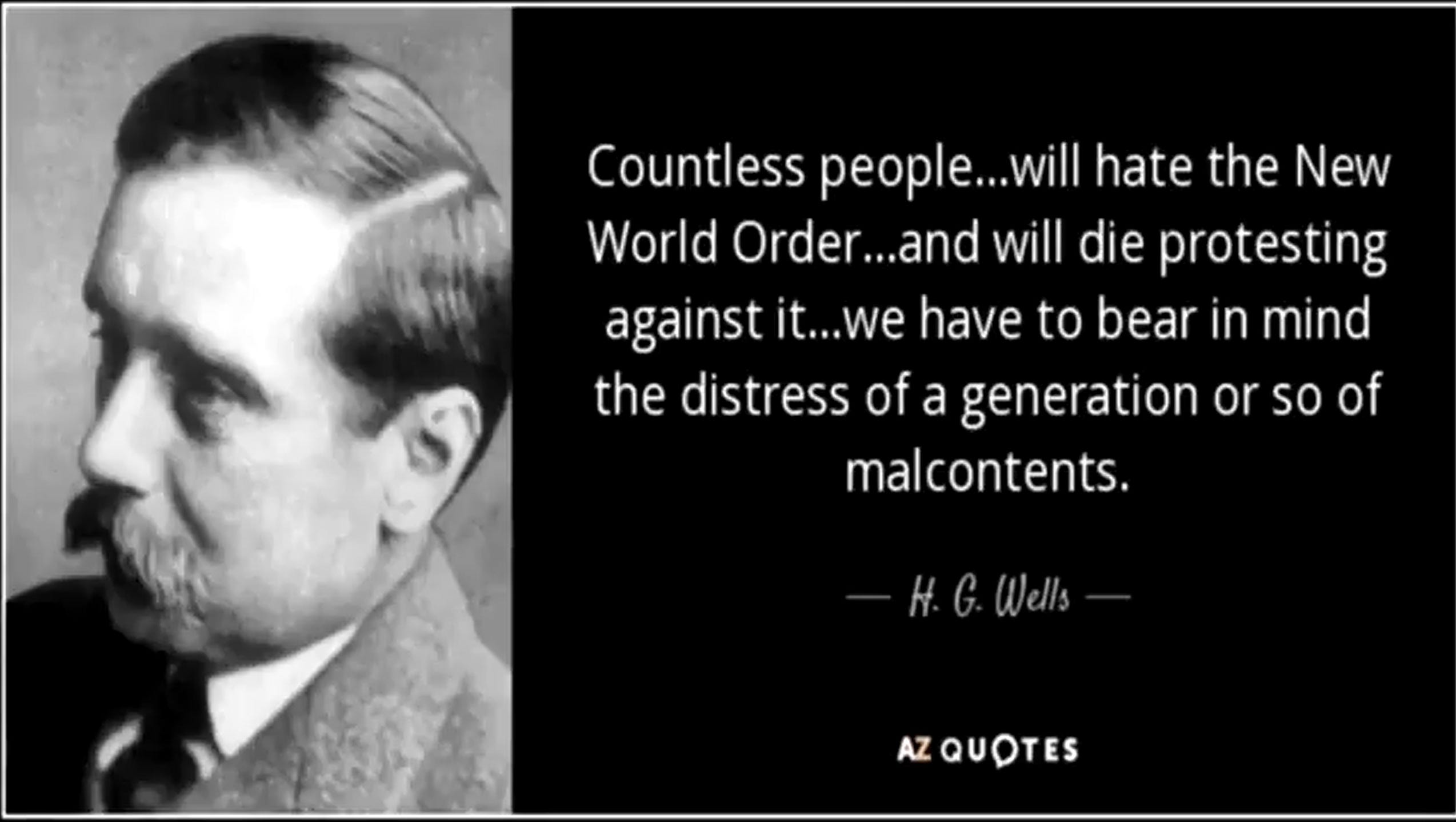
There is clearly a fork in the road amid accelerating technological, economic, and governmental changes that are part of this terrible “New World Order” (aka Great Reset) plan. Do not fool yourself into thinking these two clear paths won’t apply to you—even rudimentary study leads one to realize that these WEF “elites” truly mean “you will own nothing…” that they pitched on the world stage.
One path involves deeper integration into centralized, data-driven systems often described as the “technocratic agenda” (Fourth Industrial Revolution)—ultimately our lives being completely asset stripped and ruled via digital IDs, CBDCs, AI surveillance, and military-grade 5th generation warfare tools from firms like Palantir. The other emphasizes building self-sufficient, decentralized lives and communities outside of heavy system dependency.
The rest of this article will mostly focus on the path I assume this audience will choose.
Path 1: Compliance with the Technocratic System
This involves full participation in digitally integrated societies where governments, corporations, and AI platforms coordinate resources, behavior, and access through your data.
Key Features:
Digital Identity and Finance: Unified digital IDs linked to CBDCs (central bank digital currencies), biometrics, and transaction tracking. “Proponents” highlight efficiency, faster payments, inclusion, and fraud reduction. Critics note programmable money will eventually enable expiration dates, spending restrictions, or exclusion based on behavior, social scores, or non-compliance.
Surveillance and AI Governance: Widespread data fusion from phones, cameras, social media, purchases, and movement. Companies like Palantir provide AI tools for governments (and militaries) to integrate disparate datasets for security, immigration enforcement, welfare, and policing. This promises supposed safety and efficiency but raises the obvious risks of pervasive monitoring and “pre-crime” or compliance scoring. The very same Palantir capabilities that have been used in the theater of war, are being deployed here at home under Trump. If that doesn’t give you pause—perhaps nothing will. MAGA baby!
Economic and Social Integration: 15-minute Smart cities, automated jobs, UBI-style supports tied to digital profiles, gene editing, forced “health” procedures, brain-computer interfaces, and “you will own nothing and be happy” sharing models (per WEF marketing campaigns and discussions). Work, travel, education, and consumption increasingly require app-based verification and good standing. Gee, sounds super benign. Please, feel free to take everything left that I own, while all of the remaining assets and freedoms roll up to you!
Benefits: Supposed convenience, access to advanced healthcare/tech, potential stability in crises, economic opportunities in the new system, and reduced transaction friction. Centralized coordination can address large-scale issues like “pandemics” or “climate goals.” If you don’t see thorough this by now, enjoy your coming “depopulation” or slavery.
Drawbacks and Risks: Duh. Erosion of financial/privacy autonomy, potential for political weaponization (e.g., account freezes), dependency on fragile grids and “elite” programmed algorithms, loss of agency, and a “social credit” dynamic where dissent or non-compliance limits basic needs, let alone opportunities. Historical examples (e.g., China’s systems) show how data-centric authoritarianism can scale. The original WEF front man, Klaus Schwab, openly declared that China is the model. We should look to his words and China’s dystopian system as a clear indication of what we’re talking about. This is straight up “technocratic slavery”—not literal chains, but coercion through incentives, nudges, and exclusions in an AI-enforced panopticon. Gee, sign me up!
It amazes me every day that people are sleepwalking into this agenda and STILL think it’s either an overblown conspiracy, it won’t apply to them, or it simply won’t be as bad as some make it seem. They can’t seem to take a few hours of their distracted lives to research what these agendas are and what is said straight from the horse’s mouth. The apathetic masses that are still too busy to care or prepare are in for a seriously rude awakening.

Path 2: Building a More Self-Sufficient Parallel Life
In an era of increasing centralization—where governments, corporations, and technology platforms wield insane influence over our data, finance, food systems, and infrastructure—many individuals are rightfully seeking greater autonomy. Better late than never, I suppose. The drive for self-sufficiency, parallel economies, and resilient communities stems from a desire for security, freedom, and adaptability amid supply chain fragility, regulatory overreach, surveillance trends, and rapid technological change (via AI and data analytics tools like those from Palantir).
Whether motivated by economic uncertainty, the rightful distrust in our corrupt institutions, or simply a preference for more local control, one can logically outline the following actionable strategies. This is not some grand revolution but more pragmatic, incremental steps that will enhance personal and collective independence.
This stuff isn’t rocket science, but it makes a difference. Let it be clear, however—if you CHOOSE this as your path, you cannot wait for other people to start doing it. You can’t wait until it’s necessary. It starts with you—and it starts now. This will be a ground-up, household-by-household, and community-by-community movement—it starts with each and every individual. It will require things from each individual that have been largely unknown by the last few generations. Adapting to a different way of living and relearning these skills doesn’t happen overnight, and again—you had better not wait until you’re possibly under duress.

We must acknowledge and accept that the real solutions are NOT coming via the easy button. In fact, many will undoubtedly continue to choose apathy, compliance, and slavery over the uncomfortable change (the whole, “I don’t care, I’ve got nothing to hide” crowd). If slavery is not your gig, however, you must relearn much of what our previous generations simply knew as normal life. While this will naturally omit some of the comfort and apathy we’ve come to accept in America, it will also reveal its own rewards in time—new levels of character, self-sufficiency, autonomy, freedom, and community—things we will undoubtedly find to be long-lost treasure.
1. Achieve More Personal Self-Sufficiency
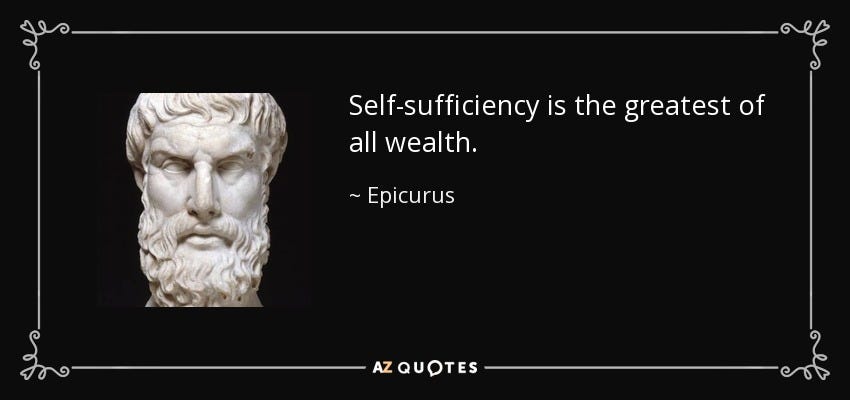
Start with the basics: reduce dependence on fragile global systems and multi-national corporations.
Food Production: Learn gardening, permaculture, and small-scale farming. Grow calorie-dense crops (potatoes, beans, squash) and nutrient-rich greens. Raise chickens, rabbits, or bees for eggs, meat, and pollination. Preserve food via canning, dehydrating, fermenting, and root cellaring. Aim for a “victory garden” mindset scaled to your space—urban balcony hydroponics or suburban plots both work. Seed saving and heirloom varieties preserve genetic diversity and independence from commercial suppliers.
Water and Energy: Store drinking water, collect rainwater, secure multiple water filtration systems (Berkey-style or DIY ceramic filters), consider solar and electric water distillers and dig wells where feasible. If you are power independent and struggle with supplemental water sources, consider a smaller atmospheric water generator for the ultimate backup strategy. For energy, solar panels with battery storage has gotten considerably more affordable and has become a very important investment. Stack wood, or even consider small wind turbines to provide some off-grid power. Wood stoves, propane backups, solar ovens, and hand tools reduce reliance on the electrical grid.
Skills and Health: Learn basic mechanics and electronics repair. Master first aid, herbal medicine, foraging, sewing, basic carpentry, and metalworking. Stock a deep larder (6-12 months of non-perishables) and rotate supplies. Physical fitness and mental resilience matter—exercise regularly, read widely, and reduce screen time (working on that myself). Get off of TV, Netflix and Social Media! You will be blown away by how quickly you get over it—and get part of your life (and brain) back.
Financial Preparation: In the following order—minimize and if possible, eliminate ALL debt (high interest debt first, of course). Live more below your means. Stack months worth of emergency cash reserves. Since cash is rapidly dying, make sure to build a supply of gold and silver that you can store securely. Don’t forget to stock up on some of the most important barterable goods.
Although controversial and seemingly part of the very digital control grid we’re looking to avoid, my studies show Bitcoin could still hold real promise for sovereign financial systems. I encourage you to listen to YouTube channels like Simon Dixon, Jeff Booth, and BTC Sessions and dissenting opinions from sources like Brownstone Insights or Parallel Mike in order to make up your own mind. I can understand how some don’t want any digital assets, period, and that’s ok. What’s not ok is to spread a biased, half-informed story to claim you’re right. Personally, I think BTC has NOT been compromised, and held in self-custody (cold storage), it could be an additional part of a very portable, sovereign wealth strategy—my opinion, NFA!
Finally, stock up on all of the proper supplies while you can (gardening, building supplies, etc.). Having all of the proper power and non-power tools, as well as things like hand-crank radios, solar chargers, and analog backups (paper maps, books, and cash) to hedge against power or digital failures. There are many online lists covering “bug in” and “bug out” or “grid down” preps, as well as lists of barterable goods worth stocking up on. If you have the means, it’s a good idea to stock extra supplies!
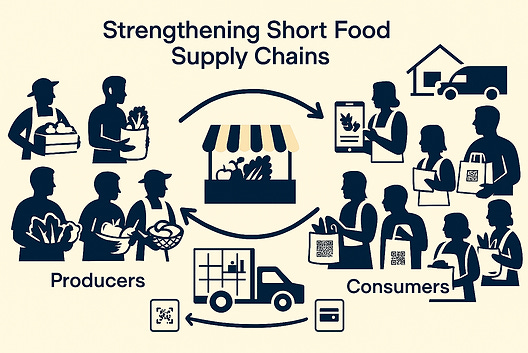
2. Develop Parallel Economies and Supply Chains
Global just-in-time supply chains are efficient but brittle. Local alternatives create redundancy and assistance, outside of the control grid.
Local Production and Trade: Support or start small businesses ranging from food processing to repair services. Farmers’ markets, craft fairs, and roadside stands keep money circulating locally. Regional commodity exchanges for grain, lumber, or livestock can emerge organically.
Alternative Currencies and Finance: Precious metals (gold/silver coins), or perhaps certain cryptocurrencies can provide options outside central banks. Barter and favor-based credit systems predate modern finance. Avoid over-reliance on volatile assets; focus on productive capital (land, tools, livestock).
Resilient Supply Chains: Map and connect local producers—farms, machine shops, herbalists, etc. Bulk storage cooperatives for fuel, fertilizer, and parts. Learn modular manufacturing and 3D printing for spares. Trade networks across regions (rural-urban links) prevent total isolation.
Focus on value creation: build skills and stock goods that people genuinely need. Informal economies have historically thrived during crises.

3. Build Local Communities and Mutual Aid Networks
Isolation is vulnerability. Strong communities provide security and efficiency.
Form or join community groups: Start with neighbors, churches, homeschool networks, etc. Organize skill-shares, tool libraries, and bulk buying clubs. Community Supported Agriculture (CSA) farms or co-ops distribute risk and reward. Neighborhood watches or mutual defense pacts (within legal bounds) can enhance safety.
Parallel Institutions: Create or support local education alternatives (homeschooling cooperatives, apprenticeships), dispute resolution (mediation circles), and welfare (church/community funds). Barter networks and time-banks (hours of labor exchanged) bypass some taxation and bureaucracy.
Communication: Use encrypted apps for coordination but maintain offline methods—ham radio licenses, mesh networks (e.g., goTenna or similar), and physical bulletin boards. Decentralized platforms (like certain blockchain or federated social tools) offer some resistance to single-point control.
Trust is earned slowly; vet people through shared projects rather than ideology.
4. Technological and Strategic Considerations
Data and AI Awareness: Minimize personal data exhaust—use cash, pseudonyms, VPNs/Tor where useful, and open-source software. Local AI models (running on personal hardware) can provide tools without cloud dependency.
Legal and Political Navigation: Understand sovereign citizenship, property rights/land patents, zoning laws, food regulations, etc. Ensure you own your land out right. Advocate for decentralization through local governance. Homesteading on rural land or joining existing resilient areas (e.g., certain rural counties) offers more latitude. Document everything; consult lawyers for group structures (LLCs, land trusts).
Scalability: Begin small and iterate. A single family garden can scale to neighborhood co-ops, then regional alliances. Measure success by reduced dependencies.
Clarification and Level Setting
Let it be clear. The above covers a pretty exhaustive list of all the things we can be doing. Each area can be a deep study by itself. I’m not saying that I completely understand or am far along with much of it. The fact is, the most basic things should be our primary focus. Do not get overwhelmed and know that this is a journey.
“Do what you can with what you have and where you currently are.”
Personally, I have focused on all of the core preps—I’ve eliminated all debt and have become much more water, food, and power independent at my primary suburban residence. I have acquired a lot of preps for grid up or down scenarios and have stacked some barterable goods. I may be further along than most, but I still have a LONG way to go. For example, I am still stuck in a salary-based job and have not created alternative/residual income streams; I need to grow a lot more food, and I have made little progress towards building my local supply chains and community. I have lots of work to do.
Ultimately, I plan to secure a more rural residence that can become my primary homestead or at a minimum, secure a modest backup/bugout property. Clearly, everyone has to be on board for a homestead lifestyle change—people often don’t see things the same way. Perhaps when the house is burning down, so-to-speak, people will finally get on the same page.
The point is, simply take some small steps each week, and before you know it, you’ll be in a much better position to weather potential storms. You’ll quickly find yourself an asset to your family, friends, and community—instead of another liability. That is the goal.
Furthermore, I’d like to share the input of a Substack writer named “Parallel Mike”, who I think summarizes it quite well:
“That being so, the solution is right there in front of our faces, screaming out at us. This does not require becoming a full-blown farmer with 100 acres of cropland and 2,000 head of cattle. Actually, that is not what I am speaking of or suggesting at all. What is really needed is what my American friends call a homestead. A simple dwelling with some gardens, a small orchard, a greenhouse or two, beds to grow seasonal vegetables, and a well or water-catchment system. Something that, for many people, is possible. Perhaps a chicken coop can be added for fresh eggs and meat. Perhaps a small wood store. Some fruit trees. A root cellar.
At that point, a new self-sustaining unit has been created, one that will provide you with a substantial amount of natural abundance and, if need be, can be expanded upon when times get tough. That is how many people survived the Great Depression. Listen back to interviews with people who lived through those times and you often hear them say, “There just wasn’t any money.” When they say this, one might assume they mean they personally had no money. And that is true. Most people had little in the way of financial reserves. But they also meant it in a very literal sense. The money itself had disappeared from circulation.
That is why real assets matter. Tools, food, water, energy, land, skills, community, and tangible wealth are not romantic throwbacks or quaint relics of a simpler age. They are the foundations of human freedom, and they are what allow ordinary people to remain standing when systems built on paper, credit, leverage, and narrative begin to implode around them. We must regain control by rooting ourselves once more in reality: meeting our own needs, strengthening our own communities, and taking responsibility for our own futures.”
I will also suggest the work of Marjory Wildcraft, who teaches off-grid living, homesteading, and gardening. She offers a lot of good content and resources.
Finally, another person I’ve recognized that is doing great work is Derrick Broze. His “45 Day Exit and Build Challenge” and “Conscious Resistance Network” are fantastic. His “Pyramid of Power” documentary is one of the best I’ve seen. This young man leads by example and is all about action. I strive to be more like Derrick.
What You Can Do Right Now
Store food. Non-perishable goods, canned foods, dried goods, rice, beans, and anything with a long shelf life. Learn to seal in mylar bags with oxygen absorbers and then put them into food-grade buckets. If you can afford it, buy months’ worth of freeze-dried food. Buy what you can afford now because prices will likely be higher next week and higher the week after that, and at some point the issue may not be price. It could be availability. While the US may be one of the more shielded countries in this regard, things will continue to get exponentially more expensive.
Store water. If pumping stations lose power or fuel, municipal water systems can be affected. Fill water barrels and use water preservatives. Setup a rain catchment system. Buy water filters. Know your nearest neighbor with a well or your closest natural water source.
Get to know your local, independent food producers and suppliers. Support your local farmers. Know who around you grows food. Join community groups. The communities that will survive this are the ones with local food production and local distribution networks that do not depend entirely on long-haul trucking from a thousand miles away.
Garden. If you have ground, plant it. If you have containers, fill them. If you have neither, find someone who does and offer to help. Every seed in the ground this spring is food on the table this fall.
Talk to your neighbors. This is a community-level challenge, not an individual one. The people who survive systemic disruption are the ones who organize, share, and look out for each other. Not the ones who build the strongest walls. The ones who build the deepest connections.
In Summary and Closing
“The acute disruption is already here. The structural cascade is locked in. The convergence is real. What you start doing now is what you will have when the full weight lands.
We already have millions of people in crisis-level hunger across dozens of countries with confirmed famines. Fertilizer is flowing through Hormuz at 0-10% of pre-”war” levels. US diesel inventories are at their lowest since 2005. Oil storage tanks in the United States are hitting bottom by July 4. Europe is hitting bottom this month. The last tanker from the Middle East apparently already docked and emptied. The US government is spending more on interest payments than on defense.”
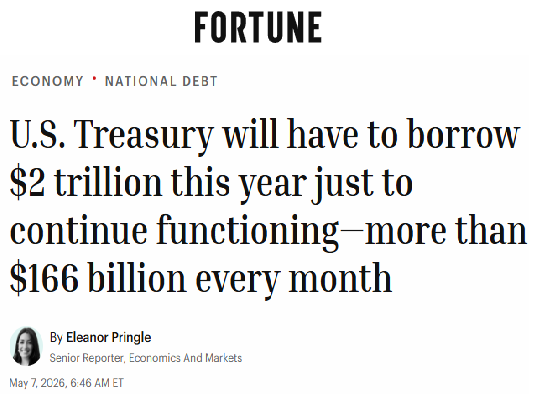
The signs are there—are you listening?
Self-sufficiency is real work with trade-offs: lower convenience, physical labor, and learning curves. Not everyone can move to a farm—hybrid approaches (urban skills + rural ties) often succeed. History shows decentralized systems (medieval guilds, frontier communities, and black markets) endure when central ones falter, but they require social cohesion and practical competence. Competence comes from action over time.
The 4th Industrial Revolution promises efficiency and control through data, automation, and biotech integration, but human-scale alternatives—rooted in biology, craftsmanship, and voluntary cooperation—persist because most people naturally value autonomy and FREEDOM. We must work for it, however. If we want to be free, the time for apathy is over.
Success stories abound in Amish communities, permaculture farms, neighborhood barter groups, and historical mutual aid societies. They demonstrate that parallel structures do not require overthrowing existing ones; they coexist and compete by delivering better results for participants.

Start today and pick one area (water/food storage, gardening, new skill, neighbor connection)—stay consistent and build momentum. Resources abound on food preservation, gardening, homesteading, etc. We must build our knowledge base and library now. We must start to apply it. Knowledge compounds but action sustains.
Resilience is ultimately individual and communal, not ideological. By securing our basics and linking with others who are also reliably committed to self-sufficiency, we gain options regardless of the coming macro trends and events.
We must get started. Now.
God Bless and remember—DO NOT COMPLY!




Disclaimer:
Let it be clearly stated that this author does not feel nor hold any hatred or contempt against any particular race or ethnicity. This author is anti-war and does not condone any violence, nor wish any race, color, creed or religion any harm. This author does not support any persons, groups, or organizations who contribute to any form of hatred, theft or violence – particularly those aimed towards innocent civilians with children being the most vulnerable. Care and consideration has been utilized to present information, including some that can be considered sensitive and controversial, in a thoughtful manner that presents it based on facts and data available. As a Commentary, this article may contain opinions by its author so as to offer a personalized perspective on the events and issues at hand.
The current propaganda states we have to build-out data centers to compete with China in the AI race. What nonsense. To use AI for legitimate purposes gigantic data centers are not required. The data centers are needed to surveil and control through Central Bank Digital currency EVERYONE all day every day, step by step! There is no need to compete with China on implementing totalitarianism unless your goal is totalitarianism.
There is NOTHING more important in your short life than making sure you know Jesus Christ as your Lord and Savior, as He is the only one who can save you. These wolves serve the devil, and will eventually receive the same fate as Him: They will own nothing and be eternally burning in the lake of fire. There is one thing they CANNOT EVER TAKE FROM US, and that is our faith in God, and that is what they want the most. To destroy our SOULS. That can only happen if you give it to them. That is why I will not comply, and will gladly die for refusing the mark of the beast, not loving my life unto death, as the Bible says, but knowing that those who love the Lord will get to be with him in paradise (heaven) when they die, for all eternity. So...NOTHING IS WORTH LOSING YOUR SOUL TO THEM. And nothing is worth losing the Lord Jesus Christ, King of kings, and Lord of lords. If you do not yet know Him, seek Him today!