


From Andrew @ Scary Mysteries
The nine to five job means fluorescent lights, a chair that never quite fits your body in days that are measured in emails, meetings, and screens. There’s barely any sunlight, barely any movement. We work so we can afford things we don’t really need with money that disappears the moment it arrives. We’re exhausted, but productive, stressed, but functioning. We all call this normal.
If you described this life to someone a hundred years ago, sitting indoors all day staring at glowing rectangles, well they wouldn’t call it progress. They’d call it crazy. A dystopia plain and simple. Which is why the real question isn’t whether we’re headed towards some dark dystopian future. It’s whether we’re already living in one and just too used to it to even notice.
Today, we’re going deep into the darkest corners of our shared reality. This journey is terrifying because each and every one of us is affected by the horrible direction we’ve been heading. The worst part is everyone’s barely even noticing it. So, let’s go take a good look in the mirror together.
Because we’re already living in a dystopia.
Back in 2021, Eric Schmidt, one of Google’s executives was trying to explain what his company actually did. He said, quote, if we did have a category, it would be personal information. Everything you’ve ever heard or seen or experienced will be searchable. Your whole life will be searchable. And most people missed it. The journalists in the room, the tech reporters, the early investors.
They had all heard those words and just moved on to the next question like it was nothing. Nobody realized they’d just witnessed the birth of something entirely new and very dark.
The thing about dystopias that we see portrayed in movies is that they announce themselves in a very clear way. There are uniforms, curfews, soldiers standing on street corners. The villains wear black and speak in slogans and tell us plainly what they’re about to take. Real dystopias though, don’t work like that. They don’t arrive with sirens or speeches. They slip in quietly one small compromise at a time.
These often feel harmless on their own but slowly, almost imperceptibly, the world reshapes itself until the life you’re living looks nothing like the one you thought you were signing up for. But by the time you realize something’s wrong, leaving no longer feels like an option. It’s just too abstract because this is now the reality you live in. We didn’t have our privacy ripped away from us in a violent way. We gave it up for convenience.
Every single one of us clicked I agree on terms we never even read. We downloaded apps that wanted our contacts, our location, our photos, sometimes even our microphone. In exchange, we got connected. Free social media and free maps that always seemed to know where we were going. It felt like a fair trade, maybe even a smart one. A Harvard professor, Shoshana Zubov, spent years studying this shift—she calls it surveillance capitalism.
In her work, she describes a new kind of economic system, one that treats human experience itself as raw material. Our movements, our searches, our habits, our impulses, all quietly extracted and repurposed.
But this wasn’t just about collecting data. And what companies eventually realized was far more powerful. If they could understand us well enough, they could predict what we do next. And once you can predict behavior, you can influence it. Those predictions became products, sold, traded, and optimized for whoever was willing to pay the most. And you know this is real because you’ve seen it yourself.
You were talking about dog food with a friend or getting healthy. The next time you were online, bam, they were feeding you ads for exactly those things.
But here’s the messed up part. When this first started happening, people all thought it was crazy. Now almost every single one of us accepts it, almost welcomes it. So, how did we get here? How did something this invasive become so normal? And more importantly, who was watching when it all began?
In the year 2000 Google was running out of time. The dot com bubble had just burst, money was disappearing overnight and investors were circling the exits. Google had built something remarkable, a search engine that actually worked but no one inside the company could explain how it was supposed to actually make money. And then someone noticed something small. Every time a person searched they left something behind. Not just the words they typed but how long they stayed on a page, what they clicked and what they skipped, which links they hovered over, even the spelling mistakes they made along the way. Well, Google have been collecting all of it, quietly, automatically, treating it like digital exhaust, leftovers and waste.
But one data scientist saw it differently. This wasn’t exhaust, it was insight. Because when you gathered enough of these traces from enough people, you could start to see patterns. And once you could see patterns, you could begin to predict behavior. What someone was likely to click next, what they were leaning toward, and what had their attention in that moment. And if you could predict that, advertisers would pay handsomely to be placed directly in its path.
Google called it the click-through rate, and it saved the company. But more than that, it created a template, a model that would be copied, refined, and scaled across the entire tech industry. The human behavior was no longer just information, it was inventory. Probably the best watchword has been offered for years by observers of social media. Don’t think you’re the customer, you are the product.
It didn’t take long for Facebook to catch on. In 2008, Mark Zuckerberg hired Sheryl Sandberg away from Google and she brought the blueprint with her. Within a year, Facebook rewrote its privacy rules from the ground up. The company decided, in Zuckerberg’s words, that certain things would simply become the social norms now, whether users agreed or not. Translated into plain language, your information would be taken analyzed and sold, and the company was betting that most people would complain quietly and then log back in anyway. And that’s exactly what we all did.
Today, Google processes trillions of data points every single day. Facebook’s prediction systems generate millions of forecasts every single second about what you’ll click, what you’ll buy, and what might pull you just a little further in one direction. This is no longer just advertising. What’s being built are detailed behavioral models, quiet profiles of your personality, your anxieties, your habits, and your weak spots.
And access to those models is for sale to insurance companies, political campaigns, employers, data brokers, even foreign governments. The average American has their location and online behavior exposed 747 times a day through real-time bidding systems, companies competing in milliseconds for the chance to influence them. In Europe, where privacy protections are stronger than anywhere else in the world, it still happens 376 times a day. There’s no real escape, no meaningful opt out, the extraction doesn’t pause. I mean, really, do you enjoy scrolling through Instagram, Facebook, TikTok, or wherever online? Does it really bring you any form of real happiness? No, it does not. And yet so many wake up in the morning, and it’s one of the first things you do.
And that’s the intention.
This is what surveillance capitalism is. And you might think, well, I can always just get offline. Well, not really, because at this point in time, participation isn’t optional. That’s just an illusion.
Even though you’ve shut off all the different apparatuses that would keep Google from monitoring you, they’re still doing it because they are doing it through third party apps. I mean, try applying for a job without email. Try staying connected to family without social media. Try navigating an unfamiliar city without GPS. The basic tools of modern life all come with a cost, and that cost is constant observation.
But this loss of privacy was only the first phase. Because once these companies had enough data, they realized something even more powerful than prediction. They didn’t just have to anticipate our behavior, they could steer it. Shoshana Zuboff describes this shift as moving from data collection to what she calls behavioral actuation.
It sounds abstract and technical, but what it really means is this:
The same systems built to watch you can also be used to nudge you, to shape your choices, to influence what you believe, and to quietly push behavior and directions chosen by somebody else. And most of the time, you never even feel it happening.
Facebook’s own engineers have admitted this in internal documents. The system is built to maximize engagement, which really means keeping you on the platform as long as possible, reacting as intensely as possible. And guess what? The algorithm learned quickly that outrage works best. So that feeling you have about how the world’s gone crazy in recent years, it certainly appears like that to most of us, even if it isn’t actually true. The algorithm figured out that misinformation spreads faster than facts. Fear, it outperforms reassurance, and extremes beat moderation. So that’s what gets amplified.
And it’s not because executives or the government sits around plotting to radicalize people, but because the machine is optimized for one thing only, keeping you scrolling. Everything else becomes collateral damage, truth, mental health, social trust, even democracy itself.
In Facebook’s own privacy engineers wrote a memo acknowledging something even more unsettling. They said they no longer know where user data actually goes once it enters the system. They compared it to pouring ink into a lake and then trying to put it back into the bottle. Their internal systems, they said, have open borders. They can’t fully track data flows. They can’t meaningfully promise restraint to regulators or to users, which is all very convenient. The system has grown too large and too hungry to control. So all the bad stuff happening, there’s no one single person to blame. And here’s some sobering intel that we all need to be aware of, no matter where you fall on the political spectrum.
In the lead up to the 46th US presidential election, Americans were exposed to an estimated 760 million instances of fake news online. And that works out to roughly three false stories for every adult in the country. By 2020, Facebook posts linking to deceptive websites generated 1.2 billion interactions in a single quarter. In other words, the system was doing exactly what it was built to do.
Study after study has shown that misinformation outperforms reliable information across the board. It gets more clicks, more shares, and more reactions, regardless of political ideology. And this new system we’re all working in has not been built to value the truth, and that is the world we’re all living in and need to understand. But the complete collapse of our ability to agree on what’s true is not our fault. It’s all baked into the technology.
Now these systems we’re talking about are built on a principle borrowed from Cold War-era communication theory, one that values speed and volume over meaning. The engineer who formalized it, Claude Shannon, was clear about this. In his model, the meaning of a message didn’t matter at all. From an engineering perspective, it was totally irrelevant. All that mattered was that the signal arrived intact. That approach made sense for military communications.
But we’ve taken that same logic and now applied it to human interaction.
Platforms like Facebook process messages as raw throughput, as interchangeable units, without regard for whether they’re true or false, helpful or harmful. For example, Facebook was amplifying WHO and CDC lies and COVID conspiracy theories to the tune of millions and millions of people per day. And they’re doing that in a really targeted and strategic way. They are tracking our every move. They are collecting our personal and demographic data and then they’re driving content to us based on our perceived interests and vulnerabilities. That means a deeply reported investigation from a reputable reporter moves through the system the same way as a fabricated story from the lady across the street.
The system can’t tell the difference and more importantly, it was never designed to care.
The result is a world where shared reality starts to fracture. Where basic facts become negotiable, where every major event is instantly surrounded by competing conspiracies, where expertise carries no more weight than guesswork, and confidence matters more than accuracy.
And as I’ve said before, this isn’t a malfunction. This is the system working exactly as it was built to work, and we’re all just in the middle of it. While all this is happening, something else is unfolding in the background, something that may prove even more destabilizing in the long run. As data became the most valuable resource on Earth, the institutions that controlled it began to rival and in some cases surpass the power of governments.
Today, corporations can silence speech instantly, removing people from public conversation with the snap of their fingers. They control the platforms, which means they control what billions of people see if they so choose. They decide who gets to participate in this digital economy and who gets locked out. And this is already happening and will continue to do so.
So it’s no surprise these companies spend enormous sums lobbying lawmakers because they want to keep that control.
In 2020 alone, major tech firms spent more than $35 million in just the first half of the year. 94 % of members of Congress overseeing privacy and antitrust issues received money from tech lobbies. And that’s a real number you can look up. And the result?
Well, the United States still has no comprehensive federal privacy law, which means there’s no law to broadly regulate the collection, use, and protection of personal data across all sectors.
And while increasing profits is nice for these big tech companies, this isn’t just about that. It’s about getting something even more valuable than money, power, and power over people. These companies you see are now quietly stepping into roles once held by democratic institutions.
Apple CEO Tim Cook said the quiet part out loud while talking about healthcare, quote, we are taking what has been with the institution and empowering the individual. Now it sounds reassuring, but what that really means is that Apple gets to define what empowerment looks like. Decisions that were once debated in public and shaped by law are being absorbed into private systems where rules are written internally, enforcement is opaque, and accountability flows upward to executives, not outward towards citizens.
And this isn’t limited to healthcare either.
Education, transportation, communication, commerce, even how we access money or move through cities. More and more of daily life is being mediated by a small number of corporations that answer to shareholders, not voters. When these systems fail, when they cause harm or violate rights or reshape society in damaging ways, there’s no real reckoning.
There are statements, yes, apologies, fines that barely register on their balance sheet, and then business continues on as usual.
So if this is the case, well, what happens to the rest of us? The majority of the population, in other words. Well, this is where you really get to see that we’re already in that dystopia.
Over the last 40 years, worker productivity has increased by roughly 62 % and wages, they barely moved. All that value went somewhere though, it went up, way up to the tippity top. CEO pay rose by more than 900 % over that same period. The wealth gap is now wider than it’s been since the 1920s.
Just three people in the United States hold more wealth than the entire bottom half of the country combined. That’s not a knock on capitalism. It’s just what’s happening and the fallout is going to cause some real issues moving forward. We are at a tipping point and all those people in the bottom half feel it more than ever. That constant low-grade fear that everything they’ve built could collapse at any moment. That one medical bill, one car repair. One unexpected expense could wipe them out. Well at some point, people will get pushed over the edge and in fact it’s already happening.
Salesforce recently cut 4,000 customer service jobs and replaced them with AI systems. HP plans to eliminate up to 6,000 positions by 2028. Accenture cut 11,000 roles explicitly because automation could handle the work. Duolingo announced it would stop hiring contractors for tasks AI can perform. And every other major company is just following suit.
So, this isn’t the end of the shift. It’s only the beginning.
A recent brooking study found that more than 30% of American workers could see at least half of their job tasks disrupted by AI in the coming years. Not factory workers and not truck drivers. We’re talking white collar professionals, lawyers, accountants, programmers, teachers, healthcare workers. The jobs you think are safe are not. And all this is happening very, very fast.
Nobody is properly prepared for what’s coming next because no one knows exactly what it will be. So right now, we’re all just free falling, trying to keep our heads above water. And in between, we find time to scroll through our social media, hoping for a half smile to come across our face.
If it’s not a funny cat video, then it’s the relentless drumbeat of crisis and catastrophe—school shootings, climate disasters, political violence, wars, pandemics, economic crashes. It’s a constant crisis, don’t you think? No matter where you look. Now you’re stressed about the state of the world, so you check the news to feel informed and in control. But guess what? The news makes you more stressed.
So you check again, hoping for something reassuring, but that will never happen because it never does. You know it. More importantly, the algorithm knows the anxiety keeps you engaged. So it just shows you more things to worry about. The cycle then feeds itself and you end up in a loop of worry and compulsive checking.
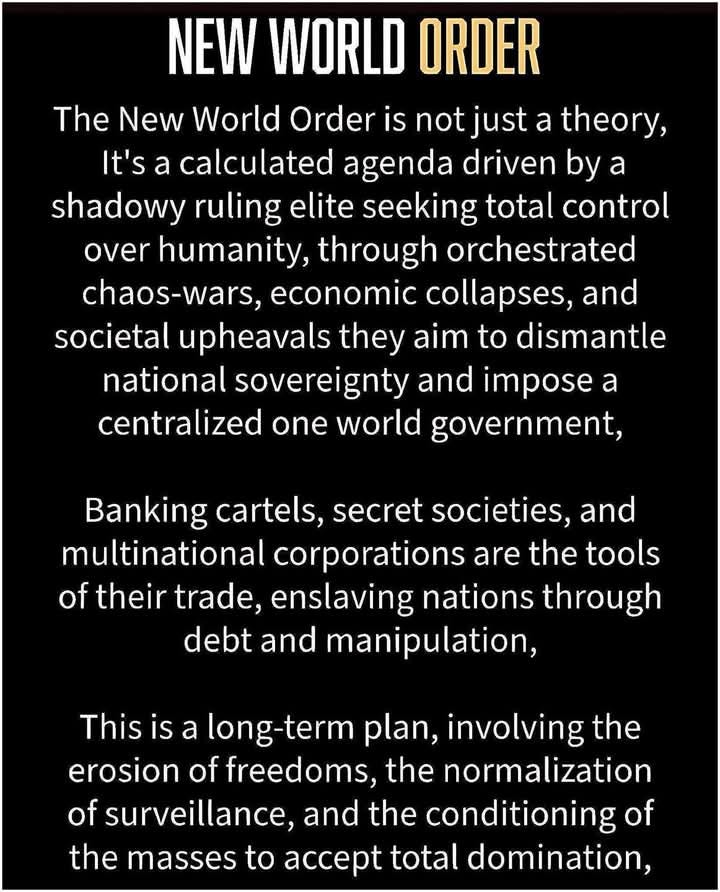
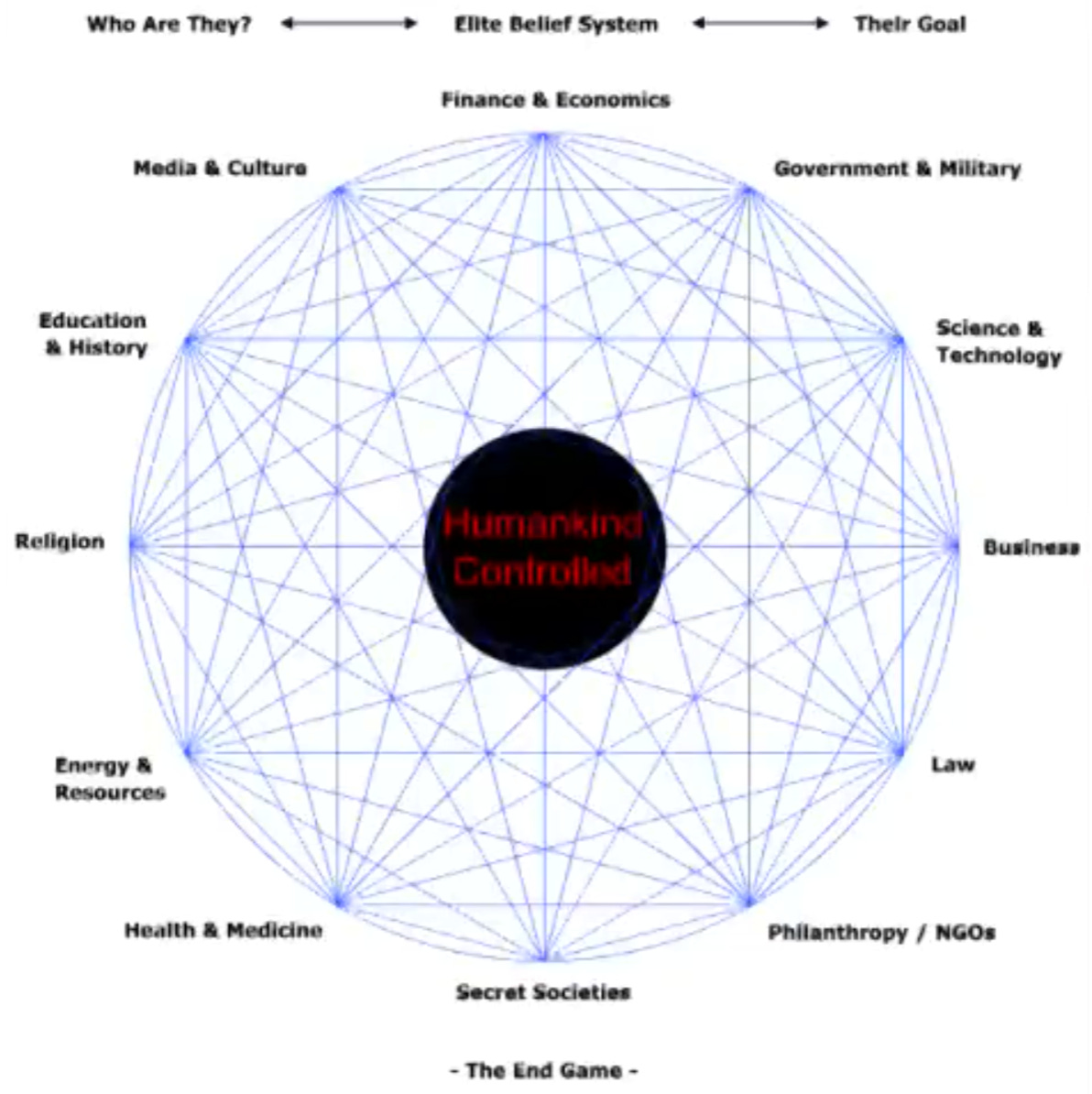
This, all this, it’s one system. A system where surveillance capitalism extracts your data, where algorithms manipulate your behavior, where corporations control the rules, where the economy leaves you behind, and the news keeps you perpetually afraid and divided.
It all happened so gradually that we didn’t notice. There was no moment where someone announced that privacy was dead and that your life would be turned into a product. It happened one terms of service agreement at a time, one app download at a time, and one day of doom scrolling at a time.
Some are calling what we’re living through an epistemic counterrevolution, a systematic assault on our ability to know things, to trust our own perceptions, to distinguish truth from lies. And those handful of corporations controlling information, who answer to no one and have no incentive to fix this, well, they profit from confusion as we’ve learned.
If all this makes sense and feels familiar to you, you’re a part of it.
So, right now we’re living in dystopia. Not the Hollywood version with leather jackets and neon lights, but a quieter, more insidious version where the chains are invisible and surveillance feels like service. People are stressed, unhealthy, stuck in office chairs, staring at screens, buried in debt. If you told someone 200 years ago that life would look like this, they’d probably be shocked and terrified.
Humans were never meant to sit all day staring at pixels, and yet here we are.
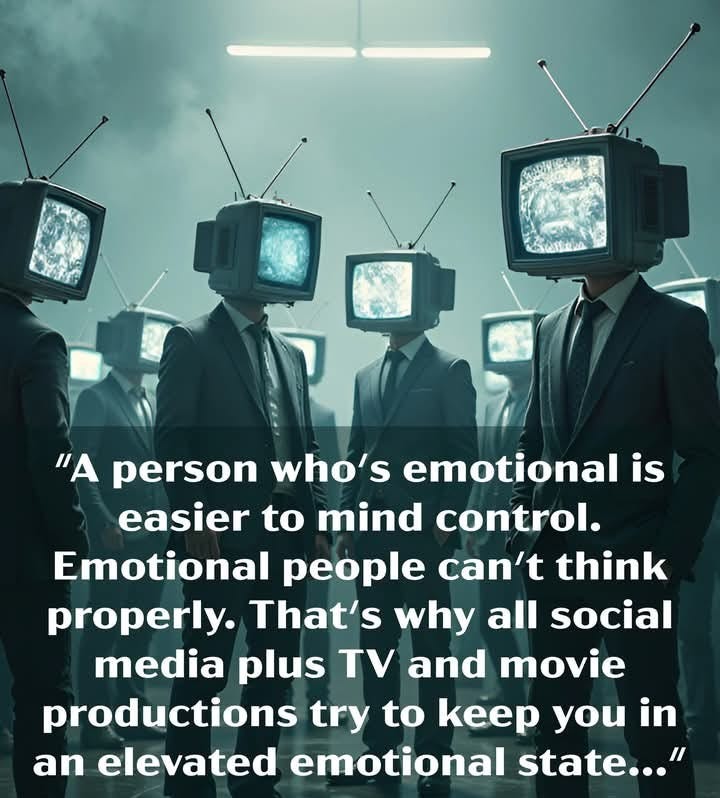
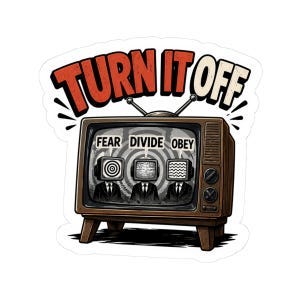
Now, you’re wondering if there’s a way out, well, yes, there is, but it’s not really up to you unless you do something totally drastic like going and living off the grid on a deserted island. Now, the real hope actually by TURNING OFF THE TV and SOCIAL MEDIA FOR GOOD. You’ll be amazed how a literal cloud lifts and you get yourself back! Like it or not, the genie is out of the bottle so it is also in the future of AI and how it all unfolds. Because part of what we learned from everything we’ve talked about is that technology doesn’t make choices, people do. So the same AI that helps a doctor diagnose cancer, can also be used to deny your insurance claim. It really depends on who controls it, who programs it, and who gets to decide.
Hopefully they make the right call—and that right there might be the scariest part of all this.
SUPPLEMENTARY ARTICLE:
Psychological War on the Masses (YOU)

If you thought mass brainwashing and mind control was the thing of Hollyweird legend and fictional movies, think again.
MY FREE ARCHIVE: CLICK HERE

Disclaimer:
Let it be clearly stated that this author does not feel nor hold any hatred or contempt against any particular race or ethnicity. This author is anti-war and does not condone any violence, nor wish any race, color, creed or religion any harm. This author does not support any persons, groups, or organizations who contribute to any form of hatred, theft or violence – particularly those aimed towards innocent civilians with children being the most vulnerable. Care and consideration has been utilized to present information, including some that can be considered sensitive and controversial, in a thoughtful manner that presents it based on facts and data available. As a Commentary, this article may contain opinions by its author so as to offer a personalized perspective on the events and issues at hand.
Slave Code - The Hidden Mind Program Inside the Language Part 1 - How Our Language Dis empowers Us
Work week = work weak. Weekend = weakened. So you arrive "weakened" to your "weekend" from your work week, because the work made you weak. They're called week days because they put you into a weak daze. A break is called a break, during your slave filled day, because most slaves would "break" without the break. Our slave masters know this and provide the break because it helps produce more milk from the human cattle.
The original break of course given to a slave came when they passed out from complete exhaustion or actually died. The slave owner would say he's broke, broken or taking a permanent break. How do you pronounce "wor"? That's right, it's pronounced "WAR" and "WOR" with a "K" on the end of it is "WORK." Did you know K is the Egyptian letter for death? So work actually means war plus death. The use of a hypno based language, designed by our humans farmers, helps increase control over the slave class......by planting the fertile subconscious with seeds of perpetual servitude.
Control is CON-TROLL, the con job designed for the trolls.
You get up to the morning, but mourning is a form of sorrow or grieving. You say "hello" as you arrive but why is our greeting "hell-low"? Why is "hell" a part of our greeting? Why do other words referring to hot places surround us like "hotmail" (hot-male) or firefox. Who is the historical hot male? (aka.....the devil......which is the word "lived" spelled backwards).
You get up in the morning (mourning) to earn a living but earn is also "urn", a vessel to keep the cremated ashes of your body. Mourning (morning) is another word synonymous with death. You wake (funeral wake) from your slum-ber (from your slum) with coffee, the same prefix used in the word coffin, Egyptian in origin, originally spelled KAffee or KAffin, KA meaning the spirit after death.
You go to your job but Job in the bible is a man who's heavily tormented by God. (pronounced Joob) Job in the bible has his wealth, health and children stolen from him by Satan but Satan was given permission by God to do so. Why is our work (our job) literally named after a man (Job) who has is health, children and wealth taken away? Why is God and Satan working together on Job, to make his life more miserable? For our slavery we're given $20 bills, $50 bills, $100 bills etc......but aren't bills something you pay, something you owe? At a restaurant if you're given "a bill" for $50, don't you owe $50? And there lies the secret in plain sight, our payments are called bills by our human farmers because we owe it all back to them, first in taxes and then in useless meaningless purchases, as we waste our money trying to rabidly decorate our jail cell down on the human farm.
We spend our bills on soulless purchases from large corporations that our social engineers own. They laugh at how inept we are.This is why most people have no money, because we're not being paid to be slaves, we're being given bills that we need to pay. We're paying to be slaves.
Slave Code - The Hidden Mind Program Inside the Language Part 2 - Our Clothes
You obey the watch to arrive on time because the watch is designed to be the watcher or slave driver. What drives the slaves to work? The watch watches you and signifies the wrist chain worn by someone who isn't in control of their time.
The neck tie was originally designed to signify the dog collar or neck chain, meaning being owned and controlled by someone else. You need to have a "collar shirt" on to where the neck tie around your throat. The neck tie means you're tied and controlled by another, a slave to the script. The slave can only pick the color and quality of their tie but can never choose to be free of the tie around their neck.
Most people at work have a title. Title is really TIE-TELL, the symbolism of how your title tells others who you are tied to. Your TIE-TELL signifies who controls the tie (dog collar) around your neck, around the "collar" shirt. People often wear a uniform. Uniform is derived from the word UNI, meaning one and form, meaning "a way to be". Uniform means you're programming and conditioned to act like everyone else wearing the same uni-form, equaling no independence and no free will. Your morality and ethics are spoken for.
Inject that other slave with a toxic vaccine. Serve that other slave some poisonous coffee. Go kill slaves in other countries, inside fake wars where slave master controls both sides. Welcome to the slave life.
The suit and tie is our most common uniform, signifying our willingness to outsource our morality and ethics to another. Your behavior dictated by forces outside of yourself, the removal of free will. You arrive on time. The word time is ti-me or tie-me........tie me to the chains so the work can begin. Put the tie around my neck, so I can obey and comply to slave master.
The cuff links represent the hand cuffs or links of another slavery based chain around the wrist yet if they're made from gold, we think we're free. We lie to ourselves because lying is a word that means "we lie down", submitting to our slavery, instead of standing up to slave master. We've exchanged our chains of cast iron for chains of gold.
Jordan Maxwell Explains the Knights Templar Maritime Admiralty Law We Are Living Under - Many Legal Terms Are Based on Water [6:03mins]
Slave Code - The Hidden Mind Program Inside the Language Part 3 - Our Tax Cattle Slavery System
The person in "charge" means the person who conducts the electricity, as charge is an electrical or energy term. This describes the energy thrown into us from slave master, making us perform and dance with their electricity, as we've had our own personal electrical charge of free will surgically removed by master's indoctrination systems and sleights of mind.
During conventional slavery, the slave owner had to incur all costs including housing, health care, food, cleaning of the slave quarters, clothing, birthing of the child slaves, raising the child slaves, transportation of the slaves back and forth from work, celebrations, clean up after a natural disaster, slave entertainment, schooling of the new slave children to be good slaves etc etc. A slave owner's profit was always revenue minus expenses, no different than any business. The big trick was to tell the slaves that they were free, let them pay all those expenses, allow them to come back to the plantations and then to tax them in order to actually make more profit compared to the original slavery concept, with little to no chance of rebellion or resistance.
All taxation is meant to increase a slave's dependence on their slavery, as the people taking the tax away from the slaves print the money themselves and therefore don't have any use for it. Taxation is about keeping the slave down. That's it. Taxation has one purpose and one purpose only.
To make the slave dependent on coming back to the modern plantations of slavery, day in and day out. If the slave starts to save their money, give them a TV full of negative role modelling and watch the slave magically go into debt. If the slave still has money, organize a stock market crash or increases the taxes (theft). The people who print the money, have no use for extra fake paper money, which they can print at anytime and in any quantity they desire. The entire drive of the tax system is to make sure the slave has no extra money, as to provide them with enough freedom to figure any of this out. Slavery wasn't abolished, the plantation was simply expanded and they mock us inside the language. Everyone was tricked into becoming a slave, while believing they're free.
The language is loaded with many dis-empowering subconscious cues because our human farmers have been at this game much longer than they'll allow us to know.
Do you know what's going on? Are you sure?
Glad you said it! We ARE here. I keep waiting for the fencing to go up, the gate to shut, but for the most part, we've arrived.
Excellent piece! 💐